
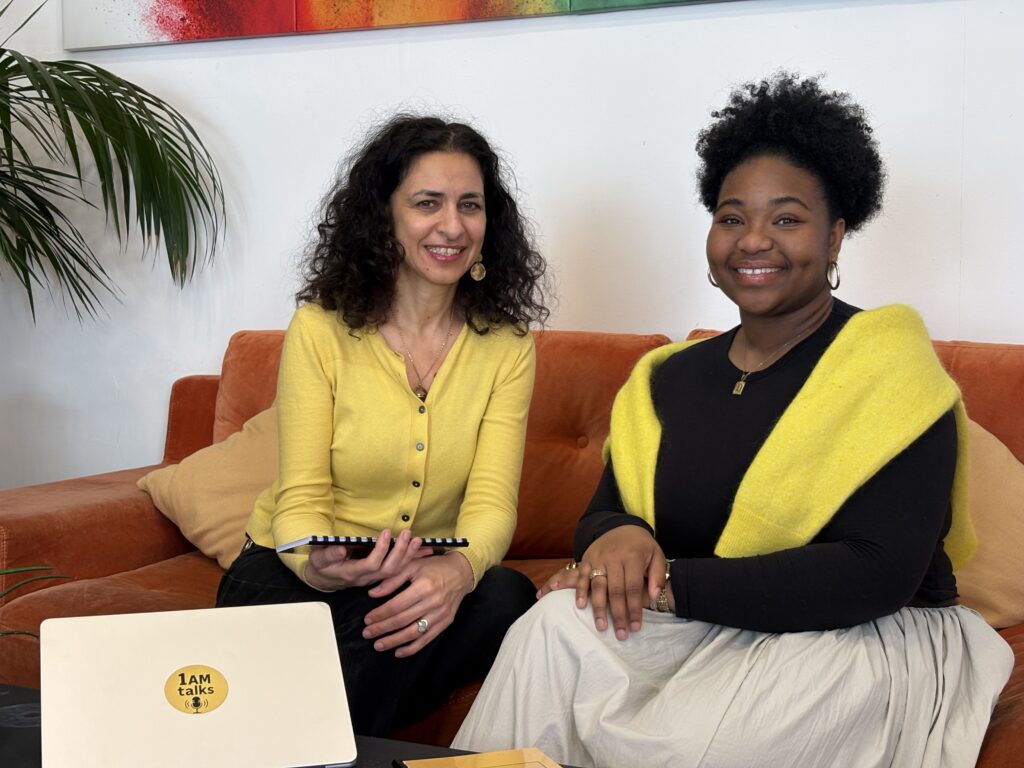
Have you ever thought about hosting interns and apprentices in your own business, and wondered what it actually takes? Over the past three months I took on an intern for the first time, and it became one of the richest learning experiences of my working life — for both of us. Here’s an honest look at what hosting interns or apprentices really involves, and why I’d encourage you to consider it too.
Teaching and learning, coaching, mentoring and change are at the heart of my working life. In this article, I look back on the three-month journey with intern Josephine Noel — the growth and the challenges, the impact and the lessons learnt.
Here’s Jo’s take on it:
“My experience working with Andry was very transformative in many ways. Andry as a boss was focused on challenging and growing me, both professionally and — more importantly in her eyes — personally. I grew so much under her supervision and learned a lot more about myself and how to relate to others in the process. This was a truly great experience that I think has shaped me for good!”
Supervisor Andry — my experience
For me, hosting interns or apprentices is fundamentally about mentoring — supporting younger talent to thrive in a new, stretching, challenging and hopefully exciting role. Actually, working with an intern felt like being a mentor and a mentee at the same time.
The start
Like any good story, let’s start at the beginning. I was fortunate to find an Anglo-American internship scheme in which the work experience I offered would count towards the student’s degree. The matching organisation was adamant that I couldn’t pay Josephine, but I could pay for additional office space and provide meaningful work. I interviewed Josephine and immediately felt we had a great connection — that she’d be a good fit for my company, with both the skills and the attitude I was looking for.
Working with intensity
This past year, as well as our L&D/OD work with various clients, the team and I have been producing 1AM Talks, a Learning and Development podcast with Artifact Films. I thought this, along with some smaller tasks around launching my coaching supervision service and supporting a coaching research project, would be ideal areas for Josephine to work on.
We worked two and a half days a week together, one of which was an intensive face-to-face day. We listened to all the podcast recordings, deciding what stayed in and out. We sent guidance to the editors. We worked on promotion, inclusive subtitles, podcast descriptions for Podbean, and co-designed all the visual assets and socials.
Josephine was a sounding board and was challenged to be a creative designer. I encouraged her to co-produce and to build a business case for more significant changes. It quickly became clear the relationship was a mentoring opportunity for both of us — I wanted to learn from her too. Her Gen Z perspective and insightful ideas went hand in hand with mine.
Challenges
Josephine’s work quality consistently exceeded my expectations. Of course there were challenges. I was perhaps over-ambitious about the other two projects, which ended up getting less time than I’d planned.
The second challenge was a positive one, best embraced as an opportunity: I welcomed having someone younger than me give a different perspective on our design, our podcast voice and our content. As I put it to Josephine: “I’m inviting you here because you have insight, wisdom and a perspective that I don’t have. If I just end up giving you admin tasks, it’s a complete waste. You have so many ideas to share with me, and I want to make the most of them. They’re as valid as mine, even if I make the final decision in some cases.”
The last challenge was simply the amount of time it took to supervise in the style I prefer. Josephine said she was really pleased with the amount of feedback she got — I was keen to ensure there was something regular, and every two weeks she asked for a fuller review of her work. These feedback conversations became a form of reflective practice for both of us. I do wonder whether a lighter-touch process would work — it’s not naturally my style, but it would make hosting an intern speedier and more efficient for the business. As someone said at the Anglo-American drinks reception, having an intern shouldn’t slow you down.
Expanding our remit
It became clear fairly quickly that Jo and I could do far more together than expected. I’d hoped, at the back of my mind, that Josephine might have ideas for rebranding the podcast. That became a reality — we moved to a new social media format, rebranding all the visual assets with a clean team signature, showcasing the guest and topic while keeping things simple.
I asked Josephine a powerful question: “What can we do to make all these processes — socials, descriptions — more streamlined, effective and efficient?” She began developing templates for our visual assets and for our newsletter (From Brief to Impact, which has over 800 subscribers).
Stepping up and building a business case
Working together, we got into the granular detail of each episode to make sure it sounded absolutely right. My intern Josephine Noel did not disappoint. I encouraged her to build a strong verbal business case for the branding changes she was pitching. Someone overheard us and later said our discussions were “quite robust, with varied views from each of us, but deeply respectful” — and that Josephine seemed older than her years. I know it was a challenge for her, but I wanted her to know that in the workplace, if you want to pitch an idea, you need a business case — you need to step up to the podium and gradually build your workplace resilience. Jo learned to build that case, share her views with evidence, and stand her ground with courage and conviction.
My first job
What was most revealing for me was realising that my own first job — as a regional coordinator for a charity — had paved the way for the L&D company I now lead. I’d had a lot of freedom in that role: organising student conferences, networks and a newsletter, with hands-off line management and regular room for innovation. It was really my dream job.
I didn’t realise, until Josephine started working with me, that I wanted — perhaps unconsciously — to create the very best internship opportunity for her: one with lasting impact, one she’d learn a huge amount from, and one that was enjoyable and immersive while also benefiting my business, my podcast, and me.
My takeaway lesson
I think we each have a natural way we want to carry out an internship supervisory role. That’s the biggest lesson I’d pass on to anyone hosting interns and apprentices for the first time: there’s no single right way to do it, only the way that’s right for you. Yes, there were organisational guidelines to follow and the relationship was clearly defined, but when I spoke with the organising group, they said what I’d provided Josephine was the best example of internship supervision they’d hoped for.
Having been to the Anglo-American internship celebration event and met people there, I’d say the real learning is in streamlining the process — induction, onboarding, reflection and completion — so it’s ready for future interns and saves time. I was struck by an approach one NHS employee shared at the event. It would also help to have the whole team — my admin, freelance and podcast team — suggest task ideas for future interns, to make the experience richer and fuller.
Tips for hosting interns and apprentices
Decide your style. If you’re considering an internship supervisor role, think about your approach: more hands-on or hands-off, more mentoring or more challenge-and-stretch? What do you want to provide, and what do you want in return? I had a clear job description, but what I wanted to provide was more than that — a cultural environment of teamwork. Unless there’s a reason not to, go with your own way of interning.
Mix manageable and stretching tasks. Some manageable tasks: talking through next steps on my research project on early-career coaches. A stretching one: producing several rebranded examples of our podcast visuals.
Consider the environment. If your company is small like mine, there may not be many people around face-to-face. A thriving work environment still matters. Josephine and I met twice a week at Impact Brixton, a vibrant co-working space in London where she could connect with others, talk to entrepreneurs, and be encouraged to reach out. One task was finding people to listen to podcast trailers and share feedback — a great mini outreach project.
Be open to being mentored yourself. If you take a mentoring style of supervision, as I did, you also get the chance to be mentored — especially if you’re lucky enough to work with someone younger. Don’t miss that opportunity; research shows it happens easily. I was so fortunate that Josephine shared her bird’s-eye view, her macro-micro thinking, her voice for the podcast, and her ideas for making our processes more efficient — her templates and frameworks. It was fantastic to be in the learner’s seat. Being open to someone so much younger, and sharing power over decisions and changes, is, in my view, what really made it work.
Overall, hosting interns and apprentices has been one of the most powerful experiences of my year. I was lucky — Josephine was deeply motivated with excellent communication skills. It takes real time and investment to do it in a way that suits both parties, so I don’t think I could sustain it continuously. But twice a year? That’s something I’d want to invest in, and I’d encourage you to as well.
As Josephine heads back to the US, the team and I already miss her. In the meantime, I encourage you to enjoy our podcast, take a look at our new visual assets, and — if you like — join our newsletter.
Signing off for now.